
Busways
RETIE certified, up to 5000 A and IP68 for outdoor use. Far faster to install than cable, and they prevent the chimney effect between floors.
A guide to busways in Colombia: types, cable comparisons, cost factors and technical checks for an informed purchase.
AMAR Colombia ·
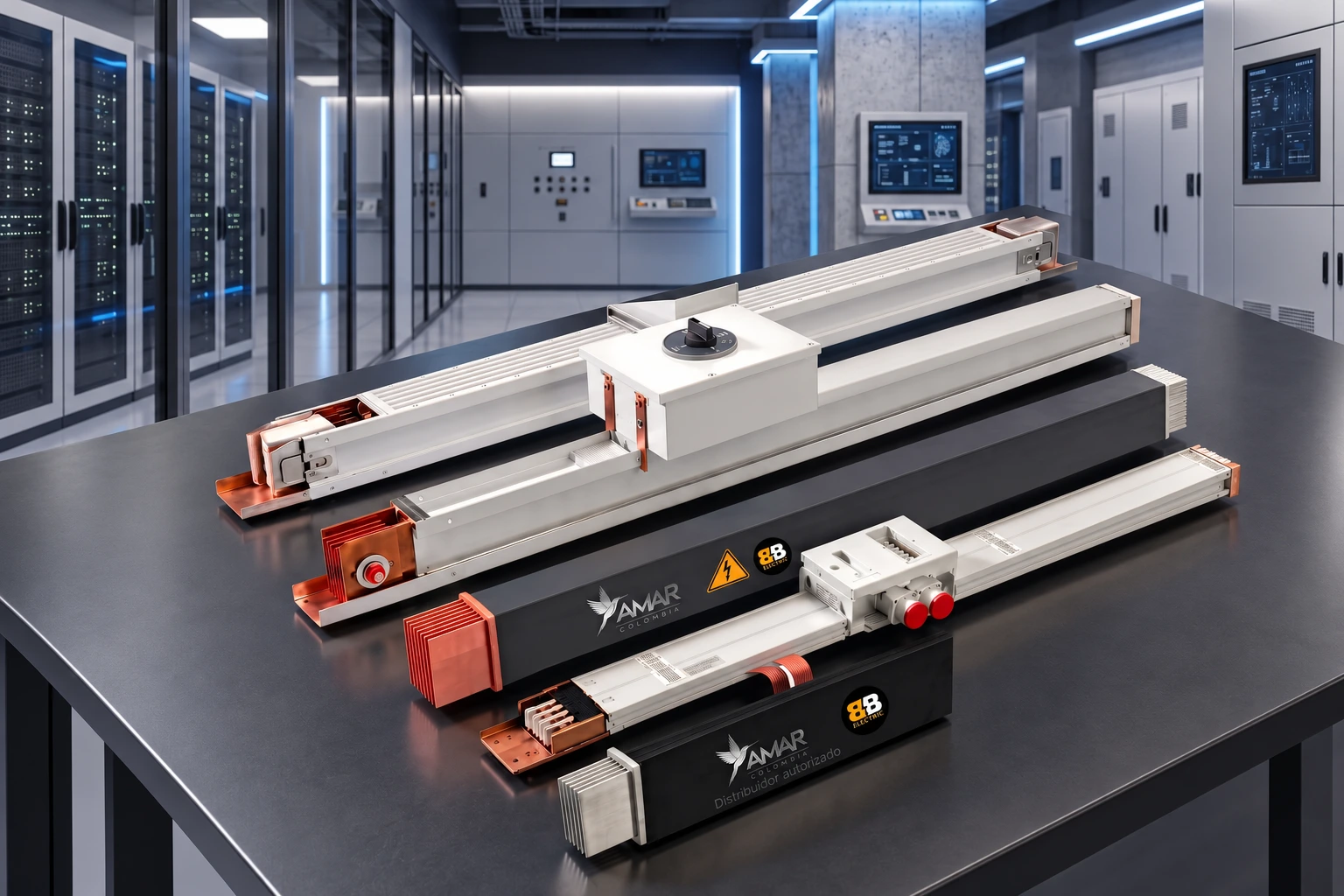
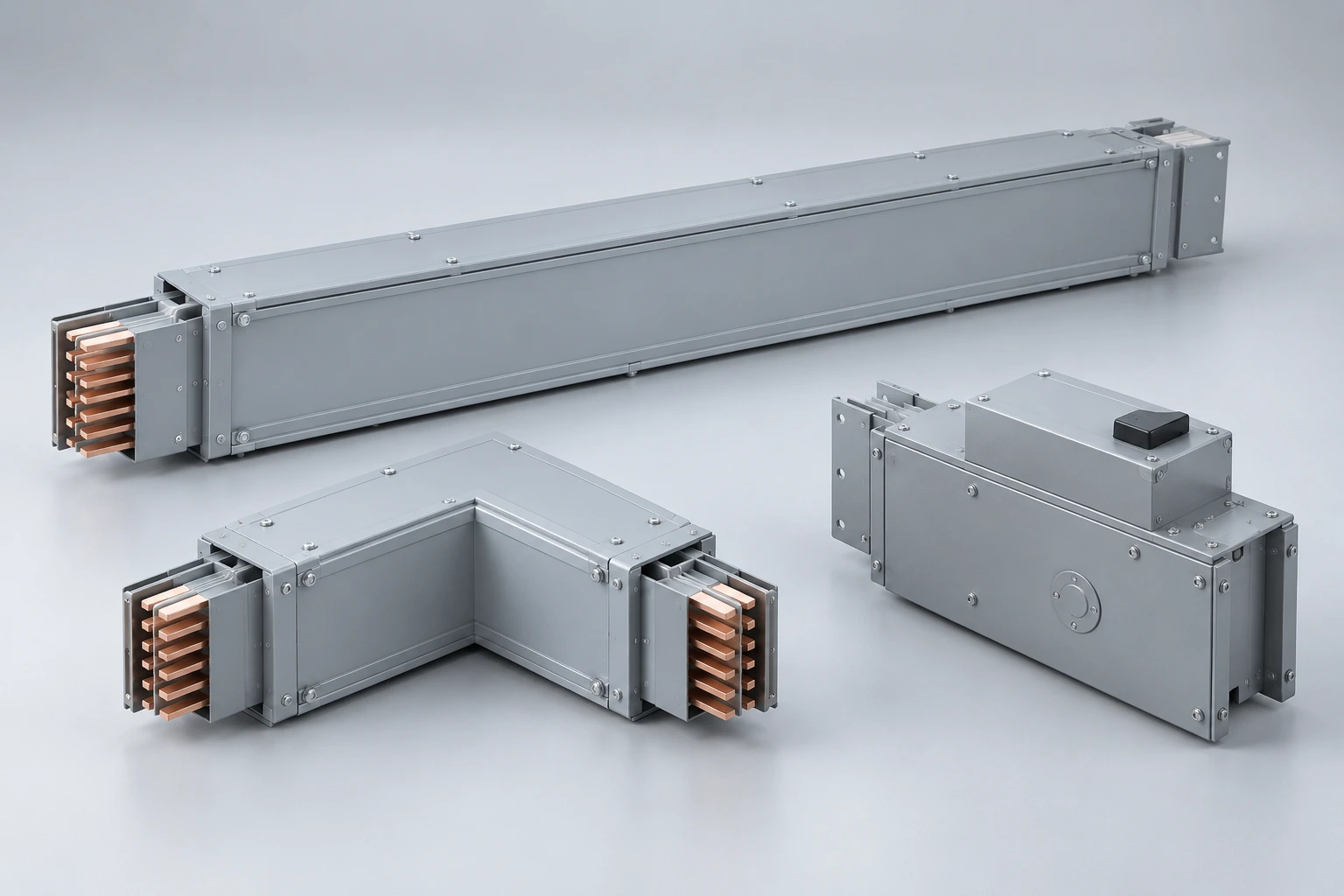
Busways distribute power through conductor bars inside an enclosure. A complete supply may include straight sections, joints, changes of direction, feeds, supports and compatible tap-off units. Selection covers the assembly and its interfaces with transformers, switchboards and loads [1].
Before requesting a price per metre, define the run's function: carrying power between two devices, distributing it to several points or allowing future tap-offs. Each function changes the bill of materials, protection requirements and coordination with construction.
Compare cables and busways using the same route, power, protection and service conditions. Include accessories, installation, losses, accessibility and future modifications. There is no universal saving: request a comparison of installed costs for your project.
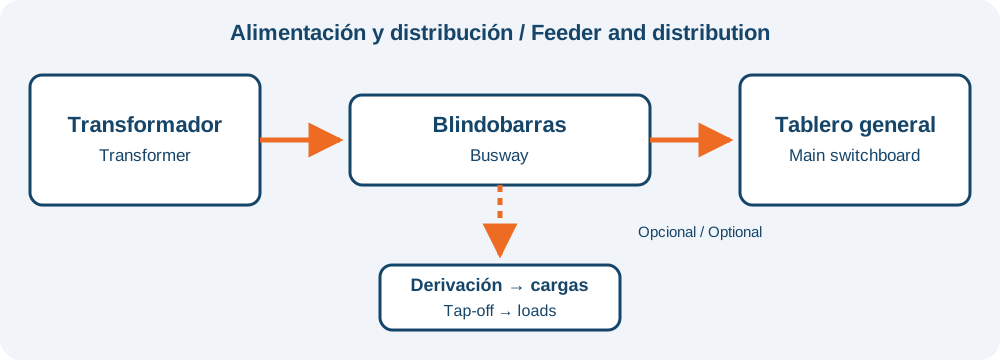
Busways can simplify high-current routes and extensions with tap-offs. Cables may suit smaller loads or irregular routes. Compare alternatives at the same capacity, voltage drop and safety conditions [1].
| Criterion | Busways | Cables |
|---|---|---|
| Space | Compact assembly; allow space for joints, supports and maintenance. | Parallel conductors may require larger trays and bending radii. |
| Installation time | Prefabricated lengths and joints can speed up installation when the route is accurately surveyed. | Includes pulling, arranging and terminating conductors; depends on access and cable count. |
| Fire and chimney effect | Check flame propagation tests and system barriers. Compact construction does not eliminate risk at floor penetrations. | Open vertical shafts can allow smoke and heat to travel. Specify suitable cables and firestops. |
| Total cost | Include lengths, joints, tap-offs, supports, installation, losses and future modifications. | Include conductors, trays, terminals, labour, losses and extensions. |
The chimney effect depends on the vertical route and compartmentation. Both cable and busway designs must address floor penetrations and firestops. Request evidence for declared behaviour; IP ratings do not establish fire resistance.
A per-metre price does not represent the whole system. Busway cost depends on amperage, copper or aluminium conductors, insulation and protection, such as IP55 or IP68. Compare equivalent performance: aluminium may reduce conductor cost, but dimensions, connections and installation also matter.
More metres increase supply cost, but a short route with many elbows, joints, adapters and tap-offs may cost more per installed metre. Water protection, special interfaces and logistics can also increase the budget. Request an itemized list including accessories, transport, installation and commissioning to compare total cost.
Organize loads by power, operating duty, simultaneity and planned growth. For a balanced three-phase load, an initial current estimate is I = S / (√3 × U), with S in VA and line-to-line U in V. Starting with electrical active power, I = P / (√3 × U × PF). Motor mechanical output also requires efficiency to be considered.
Compare demand against the selected reference's declared capacity and installation conditions. Request the manufacturer's applicable corrections for temperature, orientation or altitude. Record the source of each factor and avoid transferring values between product families.
Use resistance and reactance, or voltage-drop tables, for the reference being evaluated. The result depends on current, length, power factor and load distribution. A load at the end of the run and several distributed tap-offs do not produce the same drop profile [2].
Check units: a table in V per 100 feet cannot be applied directly to a length in metres. Document normal, peak-demand and expansion scenarios; assess total drop to the receiving equipment and the design's acceptance criterion.
Request the short-circuit study at the supply point and check compatibility between system withstand and protective-device operation. Rated current in amperes describes continuous service; it does not itself express fault withstand.
| Quantity | What to check |
|---|---|
| Icw: short-time withstand current | Declared rms value and duration; a value stated for 1 s must be interpreted with that duration. |
| Ipk: peak withstand current | Compatibility with the calculated peak duty at the installation point. |
| Conditional rating, where declared | The exact protective device and conditions used to verify the assembly. |
Ask engineering to record breaker reference, settings, clearing time and tap-off coordination. A rating in kA without its type and conditions leaves a significant procurement ambiguity.
In installations with nonlinear single-phase loads, triplen harmonics can add in the neutral. Neutral current can be significant even with balanced load allocation. Assess current spectrum and assembly heating; increasing only the neutral does not automatically address additional phase losses [4].
Define phases, neutral and protective conductor for the earthing arrangement. Request how protective-circuit continuity is maintained across joints, tap-offs and equipment connections. Do not assume an enclosure fulfils that role without system documentation.
Survey the route with dimensions and construction references: terminal positions, orientation, obstructions, wall penetrations, building joints and joint access. Review exposure to water, dust, corrosive agents and condensation. Required ingress protection must apply to the complete installed configuration.
Installation drawings should identify supports, fixed points, expansion elements and loads on connections. Apply manufacturer limits and methods. The specific manual defines torque, tools and installation sequence; values taken from another brand or joint may be inappropriate [5].
When buying busways in Colombia, request the applicable RETIE product conformity certificate and annex covering the offered family or reference. Review issuer, accreditation, validity and scope with the technical lead, including the regime and transitions applicable on the supply date [7].
IEC 61439-6 is a reference for low-voltage busbar trunking assemblies and their verification. Request the declared edition and evidence for the offered assembly [6]. An IEC catalogue reference alone does not demonstrate product or installation regulatory compliance in Colombia.
Request configuration-specific design verification, often called type tests: temperature rise, short-circuit withstand, insulation and IP protection, among others. Also review routine verification records for the supplied assembly. Test reports and the RETIE certificate have different roles; one does not automatically replace the other.
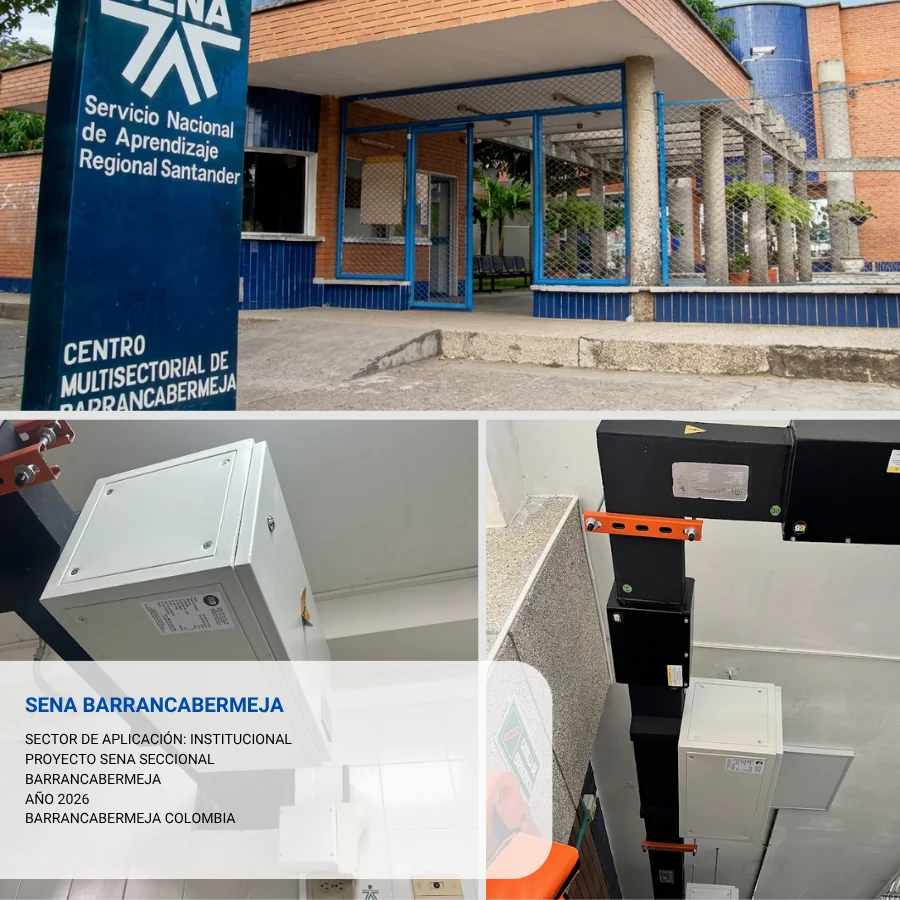
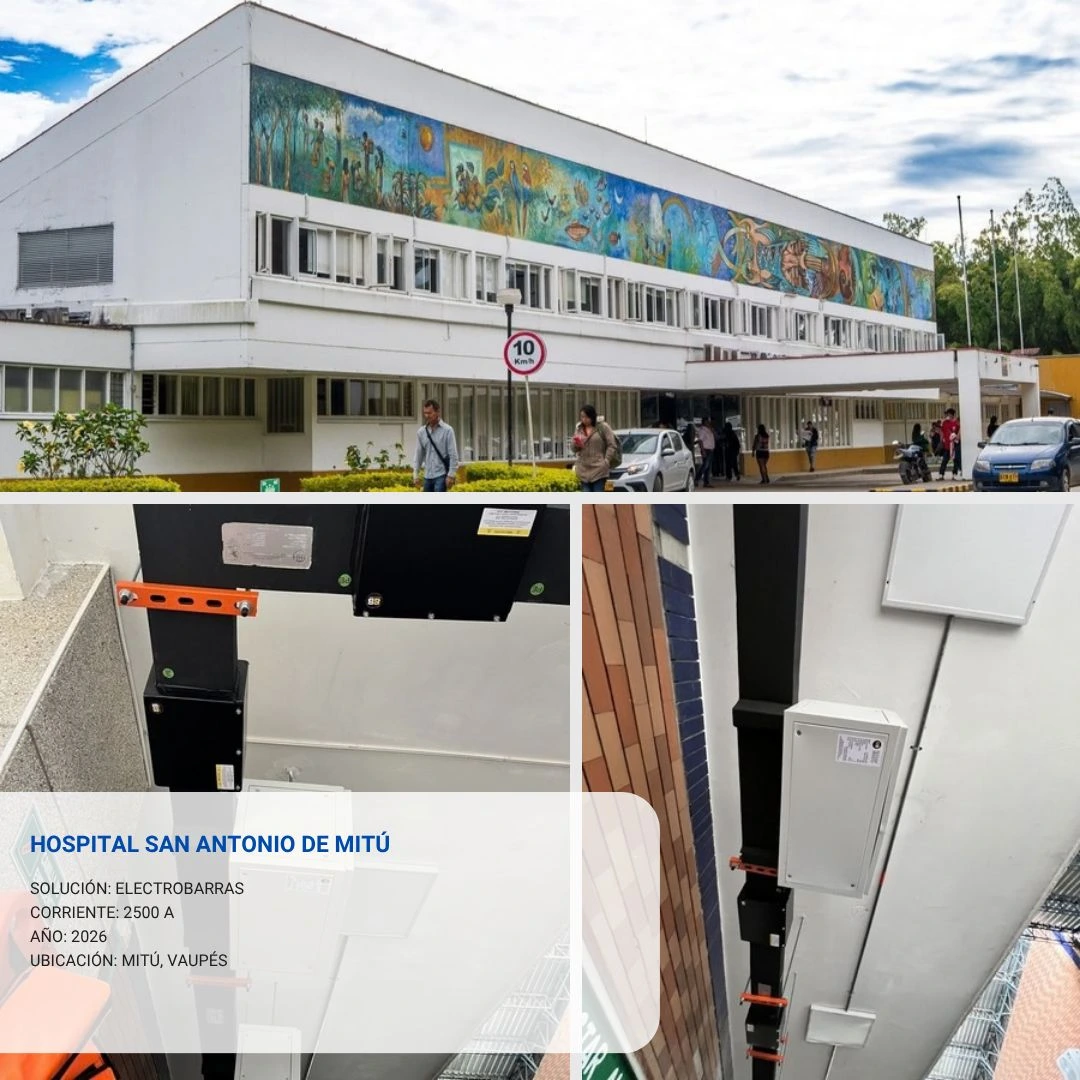
AMAR Colombia's portfolio includes Bogotá Metro (2,500 A), the Valenzza development in Floridablanca (1,300 A) and SENA Barrancabermeja (800 A). It also lists San Antonio Hospital in Mitú (2,500 A) as ongoing. These references show real applications; each new project requires its own sizing and supply scope.
To structure a request to AMAR Colombia, gather the single-line diagram, voltage and frequency, demand, available short-circuit study, earthing arrangement, load profile and route drawing. Add environmental conditions, tap-off locations, equipment interfaces, construction constraints and required delivery date.
Ask the proposal to distinguish supply, detailed engineering, transport, installation and commissioning, specifying inclusions and interface ownership. Compare quotations against the same bill of materials and record exclusions before deciding. AMAR's commercial scope is confirmed for each request.
Explore busways for Colombia and request the reference-specific certificate
It depends on amperage, copper or aluminium, insulation, IP rating, length and accessories. Send voltage, demand, route drawing, environment and tap-offs for a quotation. Compare complete installed cost, not just price per metre.
Busways can suit high current, limited space and distribution with tap-offs. Cables may suit smaller loads or irregular routes. Compare capacity, installation, safety, losses and total cost for the same route.
It depends on rain, dust, water jets and possible immersion. IP55 and IP68 are not equivalent; for IP68, confirm the manufacturer's declared immersion conditions. Also check UV exposure, corrosion and condensation, and that joints and tap-offs retain the specified protection.
There is no universal service life. It depends on design, load, environment, installation quality and maintenance. Request design life and warranty separately, plus inspection plans and replacement criteria; do not assume a fixed number of years.
Both terms refer commercially to enclosed bar-based distribution systems. Confirm the assembly architecture, reference and ratings; the name does not define its capacity.
No. Voltage, service conditions, voltage drop, short-circuit duty, harmonics, protection, earthing and mechanical configuration also require assessment.
Compare verified systems meeting the required performance. Conductor material alone does not determine losses, dimensions, service capacity or installed cost.
Physical similarity does not demonstrate compatibility. Require documented manufacturer confirmation for the references and configurations involved.
RETIE certified, up to 5000 A and IP68 for outdoor use. Far faster to install than cable, and they prevent the chimney effect between floors.
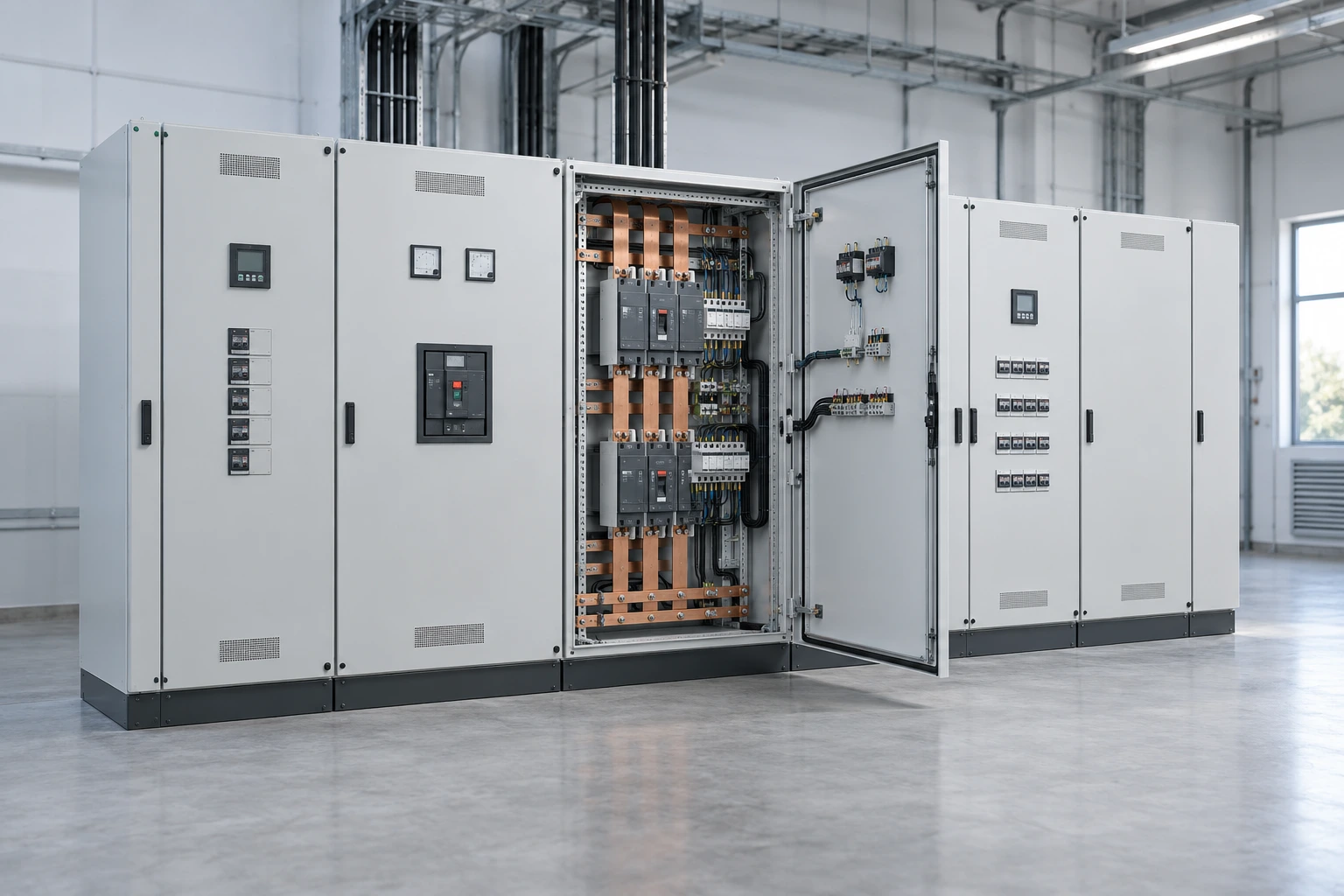
We select them against your single-line diagram, certified and type-tested to IEC 61439-1. They arrive ready to install, with the delivery date committed in writing.
Preventive maintenance: from routine to reliability
A good switchboard starts with good requirements
Safety starts before intervention
Contact AMARBusways · Maintenance · Reliability · Safety · Switchboards · Digitalization